One Word, Different Meanings in Different Markets

Methods travel between markets more easily than vocabulary does. An approach described by an index trader gets picked up by someone trading currencies, and the words come along unchanged while the things they refer to do not. The resulting confusion is quiet, because everyone involved recognises the terms and nobody has any reason to ask.
The Open

In equities and index futures the open is an event: an auction at a stated time, with accumulated orders released together and a genuine discontinuity from the previous close. In currencies there is no such event, only a handover between regions, and the open is whatever a trader has chosen to call it. In markets that trade nearly around the clock with a brief daily halt, the open is a resumption rather than a beginning, and the price at that moment is usually close to the price before the halt.
An opening range rule assumes the first sense. Applied where the open is a resumption, the initial period contains a continuation of what was already under way rather than a fresh discovery, and the range formed describes something different even though the procedure was identical.
Volume
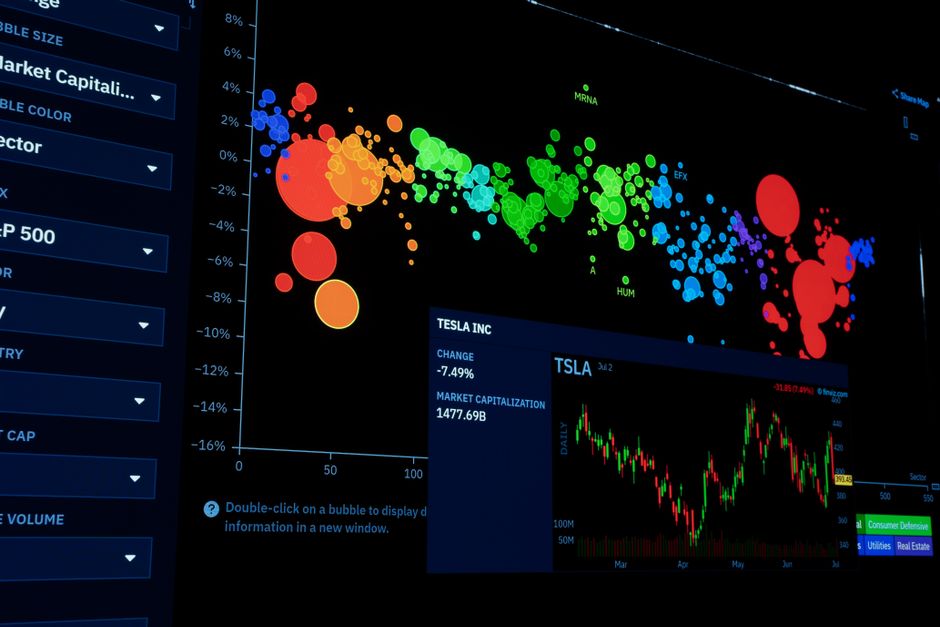
On an exchange, volume is a reported figure: the number of contracts or shares that changed hands, published by the venue and identical for everyone looking at it. In a decentralised market there is no such figure, because there is no central venue counting. What charting platforms display for currency pairs is generally a tick count, recording how many times the price updated on that particular feed.
Tick count correlates with activity and is not useless. It is also feed dependent, so two traders comparing volume on the same pair may be looking at genuinely different numbers. Any rule referencing volume needs to know which of these it means, and a rule ported from an exchange traded market into a decentralised one is referencing a quantity that does not exist there.
A Point
Point is among the most overloaded words available. In an index it is a unit of the index itself. In a futures contract it is that unit multiplied by a contract specific value, so a point on one contract is worth a different amount from a point on another. In currencies the equivalent small unit is conventionally called something else, and its size differs between pairs depending on how each pair is quoted.
This matters directly for anything involving stop distances or position sizing, since the whole calculation runs on converting price distance into money. A stop of a stated number of points means nothing until the instrument is specified, and a rule expressed in points is not portable between instruments even within one market.
The Session
A session in equities is the exchange's trading hours, with a defined start and end and often a distinct period before and after. In futures the session may run nearly continuously, with an administrative daily boundary that corresponds to no change in activity at all. In currencies, session refers to regional activity periods that overlap each other and have no official hours.
So a statement about a strategy working within the session is precise in the first market, ambiguous in the second and a matter of definition in the third. When a rule includes a time based condition, that condition is anchored to whichever meaning its original author had, and porting it requires deciding which local equivalent is intended rather than copying across the clock times.
Translating Instead of Copying
The useful discipline when taking a method from one market to another is to ask, for each term in it, what the term refers to in the source market and what the closest structural equivalent is in the destination. Sometimes there is a clean equivalent. Sometimes, as with volume in a decentralised market, there is not, and the honest conclusion is that part of the method does not transfer.
The failure mode is copying the words and assuming the referents came with them. The rule then runs, produces results, and those results get attributed to the method rather than to a definitional mismatch introduced at the border between two markets that use the same vocabulary for different things.